
from Spiritual Seeker 77
http://spiritualseeker77.tumblr.com/post/179314881046
from http://spiritualseeker77.tumblr.com/
#spiritual
The following are Forward ME minutes recently published on their website following a meeting held back in July. They mainly relate to the deliberations the group had over their submission as stakeholders in the NICE guideline review process.
Since this meeting the NICE scope report has been finalised, and stakeholders received replies from NICE with regard to their comments. We published the final report and responses to stakeholders in our blog last week.
Forward ME also discussed the recent CMRC conference, the continuing unsatisfactory roll-out of IAPT services, the debate in Westminster Hall, and the continuing work to improve medial education about ME/CFS.
Forward ME
Notes of meeting held on Tuesday 17 July 2018, 2.00 pm
You can also read these minutes on the Forward ME website
Present:
Countess of Mar (Chairman), Carol Monaghan MP, Bill Kent (reMEmber), Janice Kent (reMEmber), Tony Crouch (25% Group), Christine Harrison (Brame), Dr Charles Shepherd (ME Association), Dr Nina Muirhead.
1. Apologies
Hannah Clifton (ME Trust), Sarah Reed (ME Action), Jane Colby and Anita Williams (TYMES Trust), Sue Waddle and Jonathan Davies (MERUK), Clare Ogden (AFME), Dr Willy Weir and Tanya Harrison (Brame)
2. Minutes of meeting held on 18 May
The minutes were agreed to be a true record.
3. NICE Guideline development
3.1 The Chairman said a number of points had been raised about the NICE scoping document. She had received several suggestions from Clare Ogden and Sue Waddle.
Dr Charles Shepherd had been asked whether we should use the term “encephalomyelitis” or “encephalopathy”. He suggested we go with both names. None of the post mortems so far had shown encephalomyelitis but we could not be dogmatic about it.
3.2 The Chairman referred to lines 23 to 25. We needed to stress the severity of the illness. She then turned to the question of definitions (page 2). Charles Shepherd said there were over 20 different research definitions. The Chairman said we should go with the CDC on this. She also referred to the 40% of people found to have other conditions (e.g. heart failure). We should take out the sentence which included “5% who had no identifiable condition.”
3.3 The Chairman asked whether we should comment on the reference to children. Tony Crouch said we should add “subject to a safeguarding plan”. Carol Monaghan said there should also be something about an education plan. Members commented on the need for such a plan for children who were clearly ill/disabled, instead of pursuing them and their parents for non-attendance at school.
3.4 CBT and GET. The Chairman said she did not like that paragraph and suggested it should be left out altogether. Dr Charles Shepherd said that GET is certainly discredited. We should recommend omitting that sentence and give a reason. Charles referred to current petitions about NICE and CBT/GET. Tony Crouch asked if we could include a passage about people being pressured to do things that could be harmful. The Chairman agreed. Carol Monaghan said we had the opportunity to be bold here, and rather than just omitting the sentence we should make a bold statement about people who have reported damaging effects of such treatments. This was agreed. Charles Shepherd said the CDC had referred to this point.
3.5 Who the Guideline is for. The Chairman suggested the entry at page 3 line 6 should be changed from “may be relevant” to “will be relevant” This was agreed. Access for the severely affected/ disabled had not been mentioned; it should be.
3.6 Key areas that will be covered (item 3.3). The Chairman said we should stress the importance of working together with patients and carers, and the right to refuse treatment. Charles Shepherd said the MEA had added about co-morbidities.
3.7 Key issues and draft questions (item 3.5). Re identification and assessment, Dr Charles Shepherd pointed out that a number of people are diagnosed as having post-viral fatigue syndrome but many of them do not go on to develop ME as such; in those people the fatigue seems to resolve after a few months. He stressed the importance of total rest at first for people diagnosed with ME, CFS or PVFS. Whilst there is not scientific evidence for the benefit of total rest (no-one has done a research study) there is plenty of patient evidence. Janice Kent related how she had been advised by a senior doctor, when she first became ill, to take plenty of rest. Other members agreed.
3.8 Christine Harrison asked whether we would be sticking with the term ME/CFS. The Chairman said “yes”. If we wanted to we could try to get “CFS” removed, but we would probably have to go with ME/CFS. Christine Harrison and Tony Crouch said that at the first NICE workshop there had been a lot of support for removing “CFS”. Janice Kent added that at that first workshop NICE had suggested there might be two arms to the review, one looking into ME the other looking into CFS. If that were to happen she would like to be in the CFS arm as there were a lot of very ill people who had been given a diagnosis of CFS.
3.9 Dr Nina Muirhead said that “CFS” is the internationally recognised term for ME. It should not be confused with “Chronic Fatigue” which can follow a number of illnesses but is not the same thing.
3.10 Outcomes (item 3.6). Dr Charles Shepherd said that there are measurement tools that can be used and there ought to be clinical trials. Janice Kent spoke about three sisters all of whom had ME, all followed the same management regime, and all had different outcomes. Dr Nina Muirhead said Chris Ponting would probably like to meet the family.
The Chairman thanked members for their contributions and said she would work on Forward-MEs response to NICE the following day.
4. Minutes of the meeting of 18 May – matters arising
4.1 International project (items 2 and 3 of last meeting). The Chairman said the letter to WHO had been well received.
4.2 Science Media Centre (item 5.1 of last meeting). The Chairman said she had given up on them. Dr Charles Shepherd asked whether it might be worth inviting Fiona Fox to meet us. The Chairman said she would try.
4.3 Dr Nina Muirhead (item 10 of last meeting). The Chairman expressed our thanks to Nina for all the work she is doing.
4.4 Carol Monaghan MP (item 5.3 of last meeting). The Chairman congratulated Carol on an excellent debate and her speech in Westminster Hall.
4.5 D Tuller and the Lightning Process. The Chairman reported the BMA had said it would not withdraw the LP article in spite of David Tuller’s work. She had written to CMO and the Secretary of State on this subject and had received replies from them expressing some concern. Janice Kent said she had brought the attention of CCGs in Sussex to the apparent referral of children for the Lightning Process. She had now been appointed to a group looking at provision for children in Sussex. She had also contacted a local doctor who was interested in learning about ME/CFS.
4.6 The ME Trust – The Chairman referred to a communication received that morning from Hannah Clifton about a new clinic set up by the Trust in Crowborough. She had also met a physiotherapist who wanted to set up a private centre in Brighton with in-patient beds for people with ME. She was waiting for further information. Bill Kent referred to news of new centres in Suffolk and Northern Ireland and said this sort of initiative should be encouraged by NICE.
5. Research – The CMRC
The Chairman announced she had attended a meeting the previous week and had found it very interesting. Dr Charles Shepherd said that the current focus was on encouraging some body to produce something along the lines of the IOM report. Prof Stephen Holgate had been having discussions with the Academy of Medical Science, but they seemed reluctant to take it on. Also, there had been great interest in the “Dementia Research Platform” which had been set up in Oxford and had attracted several million pounds. CMRC had been in discussions with the Dementia Platform. It is possible something similar could be set up for ME/CFS if the money could be raised.
6. IAPT
The Chairman expressed great dissatisfaction with them. She said there are now people in job centres passing claimants’ details on to IAPT, which is wrong. She also referred to the “yellow card” system; it had been suggested this could be used to report adverse effects of Graded Exercise etc. A minister had indicated that such complaints could be reported via the yellow card, but the MHRA had denied this, saying they would make that clear on the yellow card, and that complaints about therapies should be taken up with the GP or provider of the service.
7. DWP – PIP etc.
7.1 Christine Harrison reported the results relating to PIP assessments with Capita and the Independent Assessment Service (IAS formerly ATOS). She had completed writing the information on ME and CFS for both organisations for their clinical teams and assessors. It had been agreed that, as this work was confidential, the final documents would be sent to the Countess of Mar for her approval.
7.2 Provided PIP assessors read the documents prior to doing an assessment they should have a good understanding of the rrlity of living with ME. However, Christine would need to know where poor or inappropriate PIP assessments had taken place so that she could feed back to IAS and Capita.
Janice Kent spoke about a paralysed man whose PIP was withheld because the PIP authority said he was fit for work. The Chairman stressed that he must appeal.
8. Any other business
8.1 Medical Education. Dr Nina Muirhead said the Medical Schools Council (MSC) supported her call for a survey. She would set this up in Survey Monkey or similar. The MSC had suggested she start off in a university with a view to nationwide roll-out. She had discussed with Cardiff University and had made great progress. This included fitting the topic into the main curriculum for 2018-19, the possibility of an e-learning module as part of a BSc in Medical Education, and allowing year 3 and year 4 students to choose a topic in ME to research. The last item depends upon a group wanting to pitch ME/CFS as a subject, but she was sure a number would be interested. The university is receptive of the idea of individual students researching a particular aspect of ME/CFS, such as the patient pathway/service evaluation.
8.2 Nina went on to explain that she is a NICE stakeholder. She was thinking of suggesting that NICE include an “education” member on the committee. Teaching doctors to recognise the disease with clinical confidence would save so much money and time (she had seen 13 different doctors before she received an accurate diagnosis). Dr Charles Shepherd urged her to do this; he had already applied to join the committee as a medical professional. Nina added that she was thinking of applying to join as a lay member; the Chairman suggested she do so as a medical education person.
8.3 Nina also read out a letter she had received from Dr Jonathan Leech of the RCGP. In it he said he had read the transcript of the Westminster Hall debate and was very concerned about the treatment of ME/CFS patients reported by MPs. He had noted her concern about the College’s e-learning module – he agrees it’s awful – and he says they will review the module in the light of the new NICE Guideline. Finally she reported that BBC Radio Wales have accepted them for one of their autumn programmes. The 30 minute broadcast will include 4 to 5 guests including patients, medical research, and a charity.
8.4 RCGP Conference. Dr Charles Shepherd explained that Forward-ME had met Prof Kamila Hawthorne of the RCGP who had invited us to their conference in Glasgow in October. We will be holding a workshop there. The Chairman said she was arranging for a triptych for posters (about A4 size) with leaflets on the table below. It will measure 2 metres by 2 metres. Could anyone arrange its transport? Charles Shepherd said the MEA could arrange for it to be transported from Buckingham with their courier. The Chairman said she could get it to Buckingham. Charles Shepherd called for volunteers willing to man the stand. He added that leaflets should be restricted to one per charity. Carol Monaghan said leaflets etc could be sent to her constituency office in Glasgow. Charles said he would give a presentation of 10 to 15 minutes at the conference Dr Gregor Purdie and Dr Nigel Speight (children) would do 10 minutes each.
8.5 Westminster Hall debate. Carol Monaghan gave a quick update. There were 30 participants which is good. She has asked them to participate again in a debate in the main chamber of the House. The main motion will be about biomedical treatment and biomedical research funding. She hoped a petition could be organised too. A petition with 10,000 signatures must be answered. If there are 100,000 signatures it must be debated, and a vote can then be insisted upon.
There being no further business the meeting ended at 3.20 pm.

Ethiopian Opal helps decision making & enhances creativity. Use in meditation to aid astral travel & boost intuition & precognition. Good healing stone, balances chakras & aids weight loss. Highly protective, stimulates kundalini awakening.
Our Fundraising Manager, Helen Hyland, is rushed off her feet – and needs help.
Helen has grown the level of fundraising events for the ME Association to unprecedented levels and a large part of her work involves supporting our fundraisers.
That means getting covering fundraising events, challenges, adventures, and escapades in the local press, and perhaps further afield.
We are looking for someone who could use their skills to help fundraisers present their stories in a newsworthy way and approach the local press on their behalf.
The work entails:
 Interviewing fundraisers with sensitivity, tact and empathy
You will need the use of a computer and be able to use Word and Excel and social media such as Facebook.
Expenses will be paid. Most of the work involved will be home based. We anticipate the work will require about 10 hours a week but this can vary according to the fundraising events at the time.
Working as a volunteer for the ME Association is hugely rewarding. We think you will enjoy it.
In the first instance, please write to Helen at helen.hyland@meassociation.org.uk and tell us about yourself.
We look forward to hearing from you.
Image credit: 123RF Stock Photo/Shannon Fagan
Russell Fleming, Content Manager, ME Association.
Cwtch a small Pembrokeshire-based charity has developed a novel and effective way for healthy people to experience what it feels like to ‘walk in the shoes’ of someone who is chronically ill.
They wanted to develop something that would be more effective than just talking with people about invisible illnesses and came up with this symptom-suit. It’s still being developed, but Stephen Crabb MP recently tested the suit and you can see how he got on in the video below.
Stephen-Crabb-MP-Symptom-Suit-Oct-2018I spoke with Beth Job last week – Beth is one of the charity’s founders and has M.E. – as I was particularly interested in this idea. The MS Society several years ago had attempted something similar and created several videos showing ways in which healthy people might experience the symptoms of multiple sclerosis.
I think the symptom suit is excellent. It can’t replicate every symptom or the extreme severity of symptoms that we might experience, but it is proving effective. And when people take it off, the relief they feel makes them empathise even more with someone who has a life affected by a chronic condition.
Cwtch are holding a campaign, ‘Walk in my shoes‘ and are using the suit as part of their efforts to raise awareness of invisible conditions. They have members who suffer from a variety of conditions – from M.E. to MS to Cancer – each of whom has contributed to the suit’s design.
The following article appeared recently in the Western Telegraph and provides more background. All of us here at the ME Association would like to wish CWTCH the very best of luck with their campaign.
Western Telegraph
Stephen Crabb wore a symptom suit to experience life with chronic illness
By David Lynch 17th October 2018
BACK pain, poor eyesight, itching, balance issues, leg stiffness: just some of the lifelong symptoms a Pembrokeshire MP had a glimpse of when he visited chronic illness support charity Cwtch.
Stephen Crabb MP’s visit to Cwtch’s base at Cashfields Community Centre, Haverfordwest on Friday, October 12, saw him wearing the charity’s symptom suit.
Donning a welly on one foot and a high heel on the other simulated balance issues for Mr Crabb, while wearing weights around his shoulders gave him the impression of what it is like to live with neck pain, and thick glasses simulated blurred vision.

Barry John, Stephen Crabb MP and Beth Job.
“I don’t know who first thought of the symptom suit but believe me it’s a very effective way of giving people some insight into the pain and discomfort those with chronic conditions suffer every day,” said Mr Crabb.
“I must have felt a dozen different pains and uncomfortable sensations, but unlike those sufferers I was able to take the suit off. Many people can’t get any escape from the chronic conditions.”
The MP became the first volunteer for the charity’s Walk in My Shoes campaign after agreeing to wear the symptom suit when he visited its stall at the county show in August.
Cwtch members also questioned Mr Crabb about the government’s record on Personal Independence Payments and criticised the assessment system for making a PIP claim.
Beth Job, one of Cwtch’s founders, read out a statement from a member about how they felt degraded by the treatment they received from claims officers and doctors during the process.

Stephen Crabb, MP.
Other members shared issues they had, including how assessments do not take into account that people with chronic illnesses can have good days where they are able to work with ease, and bad days where it is a challenge to get out of bed.
Mr Crabb acknowledged the assessment system was not perfect, and said work needed to be done to make sure so many claimants could receive PIP without having to go to a tribunal appeal.
The MP thanked Cwtch members for the practical points they raised about PIP and praised the charity’s work.
“Cwtch is a great example of a small but growing Pembrokeshire charity that’s doing innovative things to support its members,” he said.
Cwtch has regular meetings at the Cashfields Community Centre and hosts a support chatroom which anyone with chronic illnesses can join on Facebook.
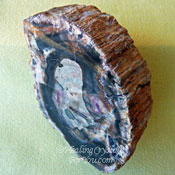
Petrified Wood aka Fossilized Wood are strong grounding stones that enhance patience and help you to create change in your life. They specifically help age related health issues, such as rheumatism and arthritis and aid past life healing.

Green Tourmaline metaphysical properties heal the earth and nature and promote study of herbalism. Excellent healing crystals that stimulate personal joy and compassion for self.
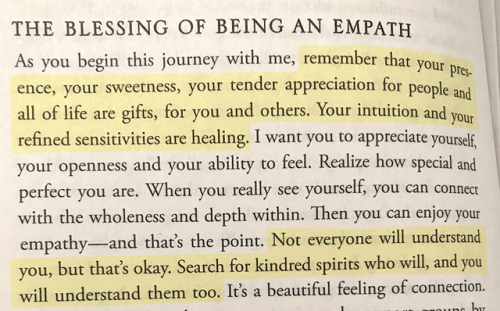
From “The Empath’s Survival Guide” by Judith Orloff:
https://drjudithorloff.com/empath-survival-guide-description/
