Showing posts with label Buddhist. Show all posts

Thursday, 12 April 2018

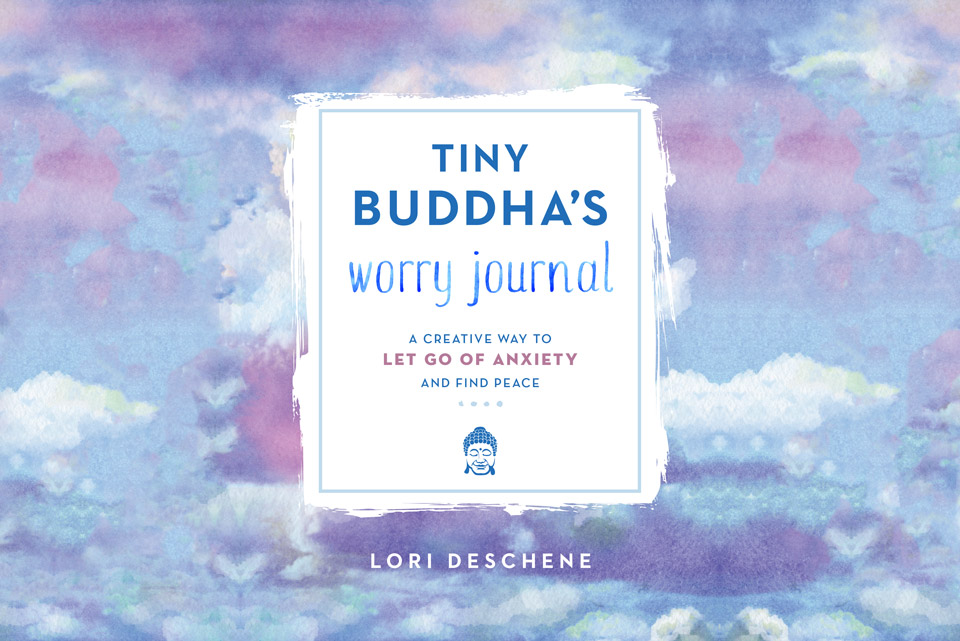
Pre-Order Tiny Buddha’s Worry Journal and Receive 3 Free Bonus Gifts

There was a time when worrying was like breathing to me. It’s estimated that we think between 50,000 and 70,000 thoughts per day and we breathe 23,040 breaths. It would likely be accurate for me to say I once panicked as often as I inhaled.

I worried about what people thought of me. I worried that people weren’t thinking of me at all. I worried about what could go wrong. I worried I might have done something wrong. And I worried about being wrong—just by being me.

All this worry was crippling. It’s hard to enjoy anything when you’re there but not because the deepest part of you is tied up in knots, held hostage by your perpetually panicked brain.

I eventually learned that my body and mind were primed for anxiety in my younger years—meaning I lived in a constant state of fight-or-flight mode, always on edge and on the lookout for threats—and that I’d reinforced this sense of dread through persistently negative, irrational thoughts.

I suspect many of us live like this: with a fearful, racing mind and a sense that at any time, the other shoe could drop—and it might be freakishly large enough to crush us. But we don't have to stay under this weight.

Over the years, I’ve learned a lot about relaxing my body, calming my mind, and proactively managing anxiety.

I’ve learned to recognize the thoughts that don’t serve me and to actively shift my perspective before I get swept up in a vortex of fear.

I’ve learned to embrace uncertainty and to trust that I can handle whatever comes at me.

And I’ve learned to accept that I will sometimes experience anxiety, no matter how much I heal or grow, so I don’t fight myself so much when it inevitably happens.

This is what compelled me to create Tiny Buddha’s Worry Journal.

Filled with quotes, prompts, and questions, along with coloring and doodling pages, Tiny Buddha’s Worry Journal provides a number of different activities to help you reframe your worries and minimize anxiety in your daily life. 

If you have a hard time detaching from worrisome thoughts, this could be just what you need to learn to let go and ease your troubled mind. It's amazing how just a few mindful minutes each day can help create major change.

If you pre-order before the June 26th launch date, you’ll receive three free bonus gifts, including:

A series of four meditations on letting go (led by yours truly), each with an EFT tapping session led by Naomi Jansen and an introductory chat with Naomi and her One Mind Live co-founder Stephen Fearnley

An exclusive audio interview with me and Ehren Prudhel, host of the soon-to-be-launched podcast Next Creator Up, focusing on worries related to pursuing a new dream (more specifically, my first feature screenplay)

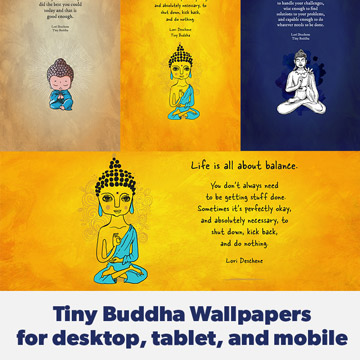
A series of three vibrant desktop wallpapers featuring adorable Buddhas and calming quotes

All you need to do to claim your bonuses is pre-order your copy from any online vendor and then forward your purchase confirmation email to worryjournal@tinybuddha.com.

Worry is a part of life, but it doesn’t have to control us. It’s possible to breathe a lot easier. These days, I do. I hope this journal helps you do the same.

**Many thanks to the amazingly talented Rose Hwang, who drew the coloring pages, just as she did Tiny Buddha's Gratitude Journal. Love her work!

About Lori Deschene

Lori Deschene is the founder of Tiny Buddha and Recreate Your Life Story, an online course that helps you let go of the past and live a life you love. Her latest bookTiny Buddha's Gratitude Journal, which includes 15 coloring pages, is now available for purchase. For daily wisdom, follow Tiny Buddha on Twitter, Facebook & Instagram.

Get in the conversation! Click here to leave a comment on the site.

The post Pre-Order Tiny Buddha’s Worry Journal and Receive 3 Free Bonus Gifts appeared first on Tiny Buddha.


from Tiny Buddha
https://tinybuddha.com/blog/pre-order-tiny-buddhas-worry-journal-and-receive-3-free-bonus-gifts/

from https://tinybuddha.com

#buddha #Buddhist

Tuesday, 10 April 2018

No Matter What Life Takes Away, You Still Have Everything You Need

“What wisdom can you find that is greater than kindness?” ~Jean-Jacques Rousseau

On February 21, 2009, I received a phone call that would alter the course of my life. It was my sister, and I could barely make out what she was saying. My mom was in the hospital and had received a diagnosis of terminal pancreatic cancer.

My body absorbed the news before my brain did. Since I had lost my ability to reason, from someplace beyond me I found a way to keep functioning. I asked my sister to put my mom on the phone.

What could I say?

Nothing.

There was nothing to say to comfort her. She was heading into the final unknown of life and I couldn’t do a thing to help her.

As soon as we hung up, I was out the door to the airport.

I hate to fly.

Somehow, I made the trip and two remarkable friends greeted me. I hadn’t seen them in a long time.

It didn’t matter. This was a crisis. What do you do in a crisis? You show up.

They hugged me and we headed to their car. My sad, little carry-on luggage trailed behind me in a precarious zigzag. The ice of the Midwest was testing my luggage’s mettle while the end of everything tested mine.

I was a complete mess. I had to constantly reach within myself to get to the beyondness carrying me through.

This “beyondness,” as I don’t really know how else to describe it, guided me. It was directive but kind. It kept showing me the whole picture.

You need the whole picture if you are going to walk with your mom through the end of her days.

The beyondness told me to ask about my friends. It said that, though my life seemed over in this instant, nothing is permanent. Not life, not grief, not anything.

Make the most of the moments with people you don’t often see, it told me. Ask them what’s on their minds and feel the truths in their hearts. You don’t need to be perfect in how you inquire about them, but do your best, it said.

I did my best. As I sat in the back of the car with the streetlights zipping past, I asked them about their lives. I also expressed my gratitude for the ride to the hospital.

It was what I needed. Somehow the beyondness knew that I needed to turn my attention outward right then. It helped. The beyondness always knows what is in your best interest if you quiet your mind enough to hear it.

I had been to this hospital before. Years ago, my sister had given birth to both of my nieces here. They are Irish twins, so I had visited here on two separate, remarkably happy occasions.

I had never visited it with my stomach locked in a death knell of knots.

As I headed into the entrance, I still had that stupid, mind-of-its-own luggage wreaking having on my extended arm.

I have never hated luggage more.

The beyondness reminded me that hating inanimate objects doesn’t change reality. It said hating animate objects and random people you meet on this journey will only make a bad day worse.

I did not need worse. Learning my mom was dying already had that in spades.

I needed better, so I had to choose kindness again and again. Even when I wanted to scream and yell and cry and scream some more. Forgive my luggage now, throw it across the room later.

Kindness first, meltdown later.

Got it.

Even though I had absolutely no idea what I was doing, I marched with tremendous urgency through the halls of the hospital to find my mom. When I located her room I allowed one small self-pity breath, squared my shoulders, and stepped over the threshold.

I immediately became the default matriarch. I say “default” because I wasn’t even nominated! Honestly, the beyondness took over, and I knew I had to follow its lead.

First things first: Hug my mom as if life depended on it, because it did. Cry, only a little, as I processed her trying to process her imminent death.

After a while, I made sure all the visitors were acknowledged, hugged, and validated. This helped me because many of them understood the depth of the grief that blanketed the hospital room. A hug here, a tissue there, and finally, a plan for me to stay and permission for everyone else to leave.

Here’s the thing about beyondness: It allows you the strength to head straight into the center of terror when almost everyone else has to flee.

Then it was just me and my mom.

I have never talked much about what it was like to be with her on diagnosis night. Mostly because it makes me deeply sad, but also, it has felt too sacred.

Until now, the beyondness told me to get over myself.

We sat side by side and cried.

After some of the tears had subsided, we talked.

We didn’t hold back any punches. I told her that I was going to miss her. Maybe that was the wrong thing to say, but I wanted to be honest.

I wanted her to know that she meant the world to me.

She told me that if I ever needed her when she was gone, to still talk to her and ask her questions. I would know what the answers would be. I had spent my life up until that point learning the lessons she had taught me and learning from her example, I would know what was what.

I would be okay.

You know, that has been the one constant in my life as I navigated her loss. I do ask her questions, and I do know what she would say.

It helps.

As we curled around each other in a ball of despair, denial inevitably found its way to us. Don’t knock it ‘til you try it.

Denial will help you function. It’s different than beyondness because it alters the truth. Beyondness tells it like it is; it’s still kind, but it deals with facts. Denial suspends your grief until you are better able to handle it. It lies to you like crazy. I am grateful to both.

In our little bubble of denial, we discussed ways to prolong her life. There were some palliative options that seemed reasonable. We thought we were looking at months. We weren’t. We were looking at days.

Days.

Yes, from diagnosis to death only seventeen days would pass.

Denial breaks down quickly at this high rate of speed.

All that I had to sustain me was the beyondness. Normally, in a harrowing situation like this, I would turn to my mom.

This was no longer an option for me. This was the test to prepare me for the rest of my life.

I would not fail her.

The beyondness helped me through. It helped me anticipate her needs before she said them. It kept giving me the big picture and reminded me kindness, kindness, kindness first.

Always kindness.

Do not kill the messenger. Embrace the messenger. Do not get snippy with the nurses. Embrace the nurses.

I was so good about this most of the time. There was one particularly awful day and one particularly awful nurse.

I tried kindness. I was so tired that day. So very tired, and I wanted someone, anyone, to make my mom’s pain stop. This particular nurse did not take me seriously. She did not take my mom’s pain seriously.

This was not a good day.

The beyondness forgave me for my angry meltdown. As long as I remembered kindness most of the time, I was doing my job.

The beyondness kept showing me that in time, I was going to heal. I was going to be able to walk around on the planet and actually find reasons to smile.

Nothing lasts. Not life, not grief, not anything.

Be kind.

Through this kindness I connected with some of the hospital staff. Even though my heart had cracked wide open with despair, the beyondness knew lashing out at others would get me nowhere.

Instead, I chose to be kind—both for their benefit and my own.

Despite everything—the fear, the hurt, the sadness—I knew keeping my frayed heart open would come back to me and my mom tenfold. This led to an overall better quality of care for my mother.

I wasn’t winning the day by any stretch, but sometimes I’d win an extra blanket if my mom felt cold. The blanket would arrive promptly, handed over with a smile.

To receive love, we must give love first. The more we give away, the more it comes back to us.

In our time at the hospital, my mom had to move floors and change rooms. I made an effort to get to know our roommates. I say ours because I spent every night my mom was in the hospital with her.

We slept in the same bed. Side by side.

It was the least I could do.

In getting to know our roommates, I learned that often their circumstances were more harrowing than my mother’s.

How is that possible? She at least had loved ones surrounding her. Some of the patients I met had no one.

I bought a young woman battling cervical cancer a gift for her baby. It was a teddy bear.

She slept with it clutched to her chest each night.

She needed that bear more than her baby at home did.

Kindness first. Always the kindness.

This is how you will survive the darkest moments of your life. When all power feels stripped away as life drifts from the dream you had painted in your mind, you can choose to be kind.

Life may take away what you cherish the most, but it cannot take away your power to choose how you face what is lost.

I knew I couldn’t control what was happening to my mother, but I could control how I responded to each situation, each day. This little bit of power was my shining gem of hope in the darkness.

Still, it wasn’t always easy to keep going. Family and friends helped. My husband showing up once denial was completely obliterated helped. Knowing I had two boys at home that loved me as much as I loved my mom helped.

The beyondness said tragedy strips away the unnecessary. What remains is truth. The truth shows you who has your back. Watch and learn.

The truth helped me know when I could rest my weary head, heart, and body. The truth knew who would hold my mom’s hand when I didn’t have the strength left in me to do so.

I had an inkling who my true-heart warrior people were, but like beyondness said, tragedy whittled away the unnecessary. What remained for me was a treasure trove of exceptional people. I thank each and every one of them for their calls, their visits, their kindness, and their love.

Thank you.

In addition to these astounding people, it was the beyondness that helped sustain me. It was the energy that surrounded my mom and me when all was quiet. Its buzzing became so loud I didn’t understand why I was the only one who could hear it.

Yes, I had to walk with my mom through the valley of the shadow of death. But maybe because I did, I was able to walk through the gates of heaven even if only for a little while.

Precious.

All of it precious.

Thank you, Mom.

About Diana DeVaul

Diana DeVaul is a wife, mother, and freelance blogger. She hopes by sharing this story, others facing great loss or change will be comforted knowing wisdom will arise from the ashes. You can learn more about her spiritual journey at spiritualwrites.com or follow her on Facebook at Spiritual Writes.

Get in the conversation! Click here to leave a comment on the site.

The post No Matter What Life Takes Away, You Still Have Everything You Need appeared first on Tiny Buddha.


from Tiny Buddha
https://tinybuddha.com/blog/no-matter-what-life-takes-away-you-still-have-everything-you-need/

from https://tinybuddha.com

#buddha #Buddhist
Tuesday, 20 March 2018

Take Back Your Power: Let Go of Blame and Focus on the Lesson

“When you blame others, you give up your power to change.” ~Robert Anthony

Blame is seductive because it makes us right and them wrong. For a moment, it feels good to say, “It was their fault,” but in the long run holding on to blame only hurts us and does absolutely nothing to help our evolution. In fact, it keeps us stuck.

But, I get it. When we feel wronged, upset, and angry, that person is the only one to blame.

I understand that some things are so egregious and so unforgivable that it seems impossible to not default to blame. It’s almost instinctual. We are hard wired to blame.

But I have come to learn the hard way that when we blame others, we avoid seeing the truth about ourselves. When we focus on what someone else did wrong, we’re not able to see our part and learn about what we need to do differently going forward.

A while ago, I was in a toxic relationship that brought out the worst in me.

I felt like I was the most incompetent and unlovable human being on this planet. My self-esteem was nonexistent. I gave far too much of myself in the name of love, without ever checking in with my heart or my body to feel whether this journey was serving me.

Ultimately, as I abandoned myself, the relationship abandoned me: He cheated on me. After giving endlessly to this relationship, that was my payback. And just to add a cherry on top, he stole from me.

I didn't recognize myself. I was stripped of many things. I lost my ability to trust myself and others. I lost the ideals I'd once had about love. I lost respect for myself. I ignored my intuition. I forgot to honor the sacredness and preciousness of my heart. I lost my confidence. I lost my innocence. For a minute, I thought I had lost my soul. I felt completely empty.

I remember that the blame, the anger, and the frustration were blinding. Every word I spoke and every thought that crossed my mind had one theme: I was the victim and he was wrong. I would happily share my story endlessly, and I made myself right every single time—and boy did it feel good to badmouth him over and over again.

But when the dust settled a bit and I was able to step back from my anger-filled stupor, I realized that I was tired of this story. I was done with it. I was ready to do some healing because the burden of carrying blame and anger was weighing me down. It was heavy.

What had happened no longer mattered; my desire to heal was greater than my desire to hold on to this story.

With my journal in hand, some lavender in the air, and tears streaming down my face, I took three deep breaths, summoned the energy of blame, and for the first time I asked myself: “How did I contribute to this? What do I need to learn from this?” I then said, “Universe, I am ready to release this story. Show me the way.”

My mind was screaming, “What! How dare you ask this question?” But my heart was proud of this because it was a moment of deep truth.

This was a teachable moment for me. I stayed with the feeling as I closed my eyes and allowed the anger to consume me. And in that tornado of anger inside of me, I finally received insight.

Once the storm inside me passed, I realized that I had never once spoke my truth in that relationship. I ignored every single red flag from the beginning. I had this notion that I could save people from themselves. I was arrogant in thinking that my love would heal anyone. I wanted to fix the world. I wanted to fix him. I abandoned myself.

Then I asked, “But how can life do this to me when I was so giving, so genuine, and so authentic with my love?” The insight that came from that question was, “That’s not love, that’s self-abuse. It is not your job to save anyone.”

And the lessons kept pouring in: From a spiritual perspective, and on a soul level, I know that it is beautiful to love everyone, but in this physical plane, we must pay attention to how people are showing up for us.

We can’t ignore mistreatment or unhealthy behaviors in the name of love. We can love from afar, we can love from the other end of the world, but that doesn’t mean that we need to stay in a relationship with anyone who is on a very different path or with someone who is clearly living a highly toxic life.

This blame that I was carrying came back to me tenfold. I was really just angry with myself for allowing something outside of me to have so much power over me, and for allowing something outside of me to override my own intuition and feelings.

These realizations laid a foundation for my healing. From that moment, I became more conscious in my interactions. My boundaries strengthened and my relationship with myself began to flourish.

I still had, and will forever have, a lot of work to do, but the minute I was willing to release blame I recharged my energy and took back my power. I realized that I do not want to be the passive observer in my life. I want to be as conscious as possible.

In this moment of truth, I also learned that self-love is realizing that our bodies and our health are sacred, and holding on to blame destroys us on a physical, spiritual, and emotional level.

The biggest epiphany I had is that we all came here to learn lessons, and some of the lessons will seem unfair, and occasionally way worse than what I share here. But I learned to surrender to this belief—the belief that my soul came here to learn lessons and that, if I can become the happy and willing student, there is so much wisdom to be gained from these moments of darkness.

After feeling anger and blame for a while, most of us, myself included, just want to find some way to escape the pain, but if we simply ignore the blame, we also shut down the message.

I understand that this is one of the hardest things we as humans can do, but I promise you that there are treasures inside of you waiting to be uncovered during each moment of darkness.

I realize that every instance of hurt warrants a different degree of blame, and the anger will vary. Some lessons will undoubtedly be much harder than others. But in the end, if we’re willing to surrender to these lessons and love ourselves through the most painful abuse and injustice, we will rise as warriors.

We will rise as light workers. We will rise as healers. We will be the light in someone’s dark world. We will gain insight. We will have a chance to do it over in a different way.

It’s time to take your power back. Begin today, pick any moment of darkness in your world, and start with this question: What do I need to learn from this?

Breathe and just listen. Your body knows the answers.

About Christine Rodriguez

Christine Rodriguez is a spiritual life coach dedicated to helping others transform beliefs, thoughts, feelings, and behaviors that no longer serve them so they can create a life that’s aligned with their true desires and capabilities. To work with her, please visit miraculousshifts.com.

Get in the conversation! Click here to leave a comment on the site.

The post Take Back Your Power: Let Go of Blame and Focus on the Lesson appeared first on Tiny Buddha.


from Tiny Buddha
https://tinybuddha.com/blog/take-back-your-power-let-go-of-blame-and-focus-on-the-lesson/

from https://tinybuddha.com

#buddha #Buddhist
Monday, 12 March 2018

7 Self-Love Practices That Helped Me Heal from a Devastating Divorce

“The best way to be loved is to love yourself.” ~Adam Lambert

My husband and family were my world. Although I’d found joy in my passion of writing, my heart revolved around my marriage. I thought we were happy. Then one day, he dropped the bomb: “I don’t love you anymore.”

Two weeks later, I found out he’d fallen in love with another woman who lived across the world. He didn’t want me anymore.

Sure, I’d known for a while something was wrong—that knowing deep in your gut that you can’t put your finger on, that tackles you in the quiet hours of the night, making it hard for you to sleep. That taunts you with fear when he doesn’t act as loving toward you as he used to. But I ignored it, because he was my world.

I’d fallen in love with him at a time when my self-esteem wasn’t too good. Social rejection at school, losing a parent at a young age, and being steeped in a very strict religion had all played their parts in making me feel that I wasn’t good enough. He made me feel loved and wanted. I was codependent and I didn’t even know.

The next few months, after he took the rug out from under my world, I felt like I was dying. The pain, the rejection, and the hurt were all-encompassing, but I had a little light inside me. It was called hope. I suddenly had this hunger to heal, to become strong, and to find my truth. I began my self-love journey.

It all started when I read Choosing Me Before We, by Christine Arylo. She spoke about self-love in her amazing book. I realized that if I ever went into another relationship, I would put myself first. I wouldn’t go into something, giving and giving and giving, knowing my own needs weren’t met. I would run far away from a man who used me in any way. I would turn away from anything less than true intimacy and love.

The problem was, in the loneliness, I entered into a rebound relationship, despite what I’d decided. The deep hole left in my heart made me blind to how harmful it was. The relationship was much worse than anything I’d experienced in my sometimes dysfunctional marriage. I had to learn the hard way. I eventually turned away, eyes finally wide open. But I’ve grown. And grown.

This is how I’ve healed through self-love, because self-love is the foundation of emotional and mental well-being.

Non-Judgment

When divorce hits you right between the eyes, you get flung into the five stages of grief with no mercy. They assault your soul like a tsunami. But they also wash over you and heal you.

I learned to let myself grieve. It was painful. I had to keep coming back to the same pain and sorrow, the same anger and “why?” questions, over and over again. But I let the waves hit me again and again. After awhile, they were smaller, gentler, more manageable.

I didn’t judge myself for my pain. I grew in my self-compassion and non-judgment. I learned to love, nurture, and coddle myself. Gentleness was my motto. And that helped me heal.

Self-Respect

When you’re steeped in a judgmental, strict religion, you likely won’t grow up with self-respect. You believe you were born in sin, and that you are this weak being who is bound by it. You are hard on yourself because of the rules imposed on you.

As the scales fell away from my eyes, I began to see that I’m a beautiful being. I’m worthy of respect. I am good to the core. We all are, but sometimes the mirror is cracked.

It’s hard to always respect yourself, but once I made that decision, I grew by leaps and bounds. I also realized how my ex’s words and actions had broken me down at times—or more so, I’d allowed his perception of me to affect the way I saw myself.

Now I could accept myself no matter whether I was having a good hair day or not, and even though I wasn’t this skinny youngster anymore. I could accept myself even when I didn’t act like a saint or I didn’t feel great! Non-judgment—I’m a work in progress.

No matter what shape my body is, I respect it because it’s beautiful and does amazing things. I still have bad days when I want to pull my curls out as they don’t cooperate or I want to get rid of the rolls around my middle, but then, mindfully, I remind myself that it’s the heart that matters. And that society has lied to me on what is beautiful. Society has honored perfection, not authenticity and true beauty.

Boundaries

This is a hard one for me, but as I’ve begun to set boundaries around me, to protect myself from people taking advantage, my sense of safety has increased. I’ve chosen to be single for now, as I know I’m not ready to enter into a relationship without falling back into codependency and losing myself again. I’m relishing in my freedom and the growth of self-love.

If I entered into a relationship now, I wouldn’t keep up the right boundaries because I would jump over hoops to keep this person in my life—hoops that hurt me. I have often given parts of myself to a man before I wanted to, just to keep him interested. No more!

Boundaries comes in all shapes and sizes, and whenever we say “yes” when we want to say “no,” we are being unkind to ourselves. It’s hard because there is a spot inside of us that loves to help and please people. And it feeds something in us. So, we have to find the balance. I’m a student of self-love and I’m learning the balance every day.

Self-Nuture

I’ve learned to find ways to nuture myself, and I’ve actually had a blast. In making sure I have a daily spiritual ritual, I’ve bought myself a few special things, I’ve joined a dance group to meet people and to just have fun, and I’ve taken up a hobby to just unwind; I’m thoroughly enjoying my freedom.

I didn’t realize how much of my energy I’d put into making my husband happy. All because I was afraid he would leave me. I bent over backward for him and oftentimes, didn’t feel free to just be myself and put “me” first.

I’m loving putting me first; even with having three teens to look after and running a busy household, my downtime is my time. It’s been healing my soul. I feel like I’m just starting on this journey of self-nuture and self-love. I can’t wait to discover more. But even the little bit I’ve learned has changed my whole mindset on life.

A Spiritual Practice

I began a meditation practice around about the time my marriage broke down. It grew as my desperation grew, especially during a very difficult time after experiencing crime as a single woman. This practice has become the lifeblood of my existence. It has helped me to calm deep anxiety, find peace, grow spiritually, and learn mindfulness.

As I’ve become more mindful, I’ve grown aware of when I sabotage myself with negativity and anxiety. It’s not always easy. But I have hope and my peace is growing.

Meditation has taught me how to be me and how to connect with the divine. It’s taught me the value of silence and taking things slower, of breathing and resting. The joy of listening and tapping into higher consciousness and the higher self.

Alongside my meditation practice, I also have a self-Reiki practice every day to balance my energy, heal me, and give me peace.

I’ve been devouring spiritual books and growing in my faith in the Universe and my knowledge. I’ve opened my eyes to see truth in many faiths and practices. It’s enlightened my soul. It’s put me on the path of love and peace.

Self-Knowledge

I’ve learned to tap into my intuition. Yes, I’ve had several men take an interest in me. I’ve learned to say “no,” because my gut says “no.” It’s been hard. When you’re lonely, you’re keen to have someone in your life, but I’ve learned to listen to that voice inside and say “no” when it hasn’t felt right deep in my gut.

I’ve grown in my intuition practice by doing Reiki, reading oracle and tarot cards for myself (such a powerful mirror into the soul), practicing soul writing, and just plain going with that deep, inner voice. I’ve grown more aware of miracles and synchronicities; I’ve grown in gratefulness.

Finding tools to get in touch with my higher self / Spirit has been essential in this time of my life. I’ve had to grow up fast. When I married my husband, I was young and naïve. He was the main breadwinner and head of the home. I’ve had to learn greater responsibilities and make big decisions for my family, instead of relying on him to steer the ship.

Being able to access my higher self has led me to make more guided and calmer decisions. It’s increased my sense of peace and wholeness as I’m following my true desires and that still, gentle voice that’s deep inside. It’s enabled me to navigate difficult relationships and situations with a sound mind. Yes, I sometimes get it wrong, but it’s like a fitness routine—the more you practice it, the better you get.

Letting Go

I think the hardest part for me has been to let go and forgive. Together, hurt and resentment have been the one wave that has broken most violently upon my shore. But part of self-love is forgiveness.

We only harm ourselves when we refuse to forgive those who have hurt us. Yet, as much as we know this fact, it’s not always possible to feel forgiveness straight away. In fact, it’s taken me one and a half years since that dreadful day to start to see the light. Today, I prayed for the well-being of my ex and the woman he left me for. And I meant it! I want their highest good.

The thing that has actually helped me to forgive the most is to realize my own worthiness. As soon as I chose to believe that I wasn’t responsible for what happened or that there wasn’t something dreadfully flawed about me which made him leave me, the desire to blame disintegrated. I released and validated myself and it became easier to release him. I began to see him as a human being with his own hurt and pain—that’s why he’d hurt me.

I have to choose daily to release him and what happened back to the Universe. I choose daily to believe that what has happened is being used for my good. And it is. I can see how much I’ve grown. I can see how love has worked this whole thing out to make me feel more loved and more supported.

What I’d deeply feared happened to me, and I’m still okay. I’m more than okay! I now know that it will always be okay. That deep inside, no matter what happens to us, we’ll be okay. We are whole; we are love; we are connected. We are growing and evolving toward better beings. We are deeply, irrevocably loved!! I’m going to practice that love every day. It’s called self-love.

About Kathy Bosman

Kathy Bosman is a homeschooling mom and editor by day, and a fiction writer when she gives into her muse. She’s passionate about stories with heart and dabbles in some art. She’s also a Reiki practitioner, tarot and oracle card reader, and Christian mystic. You can find her at kathybosman.com, joyfulreiki.blogspot.com and indieeditingchick.wordpress.com and on Instagram at ray-of-light-17.

Get in the conversation! Click here to leave a comment on the site.

The post 7 Self-Love Practices That Helped Me Heal from a Devastating Divorce appeared first on Tiny Buddha.


from Tiny Buddha
https://tinybuddha.com/blog/7-self-love-practices-that-helped-me-heal-from-a-devastating-divorce/

from https://tinybuddha.com

#buddha #Buddhist

Tuesday, 6 March 2018

The Antidote to Shame: I Am Enough

“You alone are enough. You don’t have to prove yourself to anyone.” ~Maya Angelou

I grew up with a father who was an addict. When I was fourteen my dad hit rock bottom and lost a job with a six-figure salary, my parents separated, my dad went to rehab for alcoholism and sex addiction, and I learned my dad had been cheating on my mom.

My dad’s immense shame for his actions led to him being on suicide watch in the rehab hospital where he was staying. Even though I knew the word “shame” at the age of fourteen, I was not acutely aware of what it meant. But looking back, this was not only my dad’s overwhelming feeling, but also my own emotional state.

I can remember a Sunday school member, from my mom’s class, coming over to give my mom a check to help with our house payment. It was such a wonderful, kind gesture, but I felt so embarrassed that my friend’s parents were giving up their own money, money they could use for themselves, in order to keep a roof over our heads.

My feelings of shame deepened as I found our family depending on church and family members to keep us financially afloat.

My mom was so depressed that our home quickly became a mess, which further isolated me, because I felt too mortified to invite friends over. I was deeply ashamed of my dad and our messy home, and without realizing it, I started to develop feelings of inadequacy.

In my fourteen-year-old mind, my family defined who I was, and their mistakes left me feeling not good enough and not worthy. 

At this young age I had never heard Maya Angelou’s words, “You alone are enough,” so I tried to prove my worth by getting a job at the young age of fourteen. And my work, school, and activities at church became a means to prove to others I was good enough.

Now, at the age of thirty-nine, I still recognize this tendency to demonstrate my value to others. Because of my story, I will likely need to work at reminding myself of my beauty and worth for the rest of my life. Maybe this is true for you as well.

I’ve realized that shame led me to spend a great deal of my life being a plastic surgeon of sorts, who constantly tried to cover up my imperfections. Shame encouraged me to keep a perfect house, always wear makeup, and to build a resume that said I was somebody.

Obviously it’s not a bad thing to keep a clean house, maintain your physical appearance, or obtain graduate degrees. I don’t regret some of the accomplishments I’ve made along the way, and yet I’m aware that I’ve worked myself to death at times, in order to validate my worthiness.

Shame is the voice in our heads that questions our own worth and beauty, and the devil on our shoulder that convinces us we don’t measure up.

For me, it has been incredibly important to let go of the need to be perfect, in the process of healing my shame. If I don’t have to be perfect, I can then be honest and vulnerable with friends about the struggles I am facing in life.

Early my marriage, it was important for me to create the illusion that I had the perfect marriage. But if you are married or in a relationship of any kind, you know sustaining a partnership can be incredibly tough. When I started to open up to my friends about this, I noticed they were more open with me about the struggles in their relationships.

When we start to share the painful aspects of our story with others, it’s often as if we can hear the crickets, cicadas, our friends, and all of creation join in a mighty chorus of “me too.” And once we hear the “me too” somehow it normalizes our story, and reminds us we are all on this journey of being human together.

Another important tool for me on the quest to free myself from shame has been to find people who offer me empathy and acceptance. 

Shame can be a very isolating feeling that makes us feel like we are sinking in quicksand, but when we keep our story to ourselves, our profound feelings of self-loathing deepen and we descend further into the sand. However, one antitoxin to avert shame is finding safe people who will receive our stories and help pull us out of the sand that traps us.

How do we find these people? I encourage you to think of someone in your circle of friends, at your workplace, in your family, or at your place of worship who is accepting, empathetic, free of judgment, and who it just feels good to be around.

The person you are likely thinking of is type of person who kindly remembers when you’ve had a recent death in the family, and when they ask you how you are managing with the grief and loss, you really feel that they care about you.

This is someone who it feels safe to share your darkest secrets with because you believe this person will confidently hold your story.

When I was a teenager, the first people I really trusted to share my shame and pain with were counselors, the youth leaders at my church, and eventually I opened up to trusted friends.

It can be incredibly scary to open up to others with our shame stories, and yet when we find the audacity to share parts of ourselves we are hiding, we then start to find our voice, see our strengths, and recognize our shared humanity with others.         

It is so healing to experience people who receive our shame stories and who see and affirm us, even when we feel unworthy of this love. And even though I am aware these external voices of affirmation are paramount in the task of healing the shame that binds me, I am aware the most vital voice is my own internal voice.

It is so important for us to see our beauty, accept ourselves, celebrate who we are, and to know that we matter. So when we start to doubt ourselves, it is very important for us to remind ourselves that we are enough.

Knowing that we are enough means that we see our gifts. So what are the gifts we have to offer the world? And do we know deep down in our soul that we are enough? It is crucial in the process of healing the shame we internalize, to start affirming ourselves and our value.

I have turned one of my favorite Maya Angelou quotes on it’s head and made it into the following mantra:

Take a deep inhale and exhale and then say out loud or in your mind’s eye:

I am enough.

Take a deep inhale and exhale and then say out loud or in your mind’s eye:

I don’t need to prove myself to anyone.

Don’t end up like me and waste way too many years trying to prove your worth. You are complete, beautiful, and worthy just as you are.

Let’s give up the exhausting task of becoming plastic surgeons who try to cover up our blemishes, and instead remember that our scars are actually signs of strength, life, resilience, and beauty.

Instead of being a plastic surgeon who masks and hides shame, I am now making it my mission to become a soul surgeon. I believe the task of a soul surgeon is to operate on shame through: naming our vulnerabilities, surrounding ourselves with people who celebrate us, and making sure we find a voice from within that knows our own worth and value.

We are truly enough. May we let this knowledge settle into our mind, bones, flesh, heart, and every part of our being.

About Christy Bonner

Dr. Christy Bonner is a licensed marriage and family therapist, a board certified chaplain, and a certified yoga teacher.  Check out her blog: www.mindbodyandspiritcare.com.

Get in the conversation! Click here to leave a comment on the site.

The post The Antidote to Shame: I Am Enough appeared first on Tiny Buddha.


from Tiny Buddha
https://tinybuddha.com/blog/the-antidote-to-shame-i-am-enough/

from https://tinybuddha.com

#buddha #Buddhist
Friday, 2 March 2018

Feeling Empty? Here’s How to Find Joy (and Yourself) Again

“Many people are alive but don’t touch the miracle of being alive.” ~Thich Nhat Hanh 

“Who are you? No, really. Who are you?”

I stood at my bathroom mirror, towel twisted around my head, inspecting my own reflection. A woman I hardly recognized looked back at me with empty eyes. Empty mouth. Empty insides.

“Who are you?”

Silence.

“What do you want?”

Nada.

“What are you thinking?”

Zilch.

I sighed and reached for the toothbrush. The truth is, I’d been there before. That empty-sad feeling. The feeling of not quite fitting in. Not quite feeling fulfilled.  

Before, I’d brush it off. Dig deep, push through, move on.

I’d say everything was just fine. It sure looked just “fine.” After all, I was a fully functional adult. Everyone said so.

I had my education, a career, a husband, kids, a house.

I was chipping away at that mortgage and student loan debt. They’re the good kinds of debt, you know.

I’d checked the boxes on life’s to-do list. Isn’t this what we should all be aiming for?

I didn’t know it yet, but this time would be different. That moment would be the turning point after too many years convincing myself that I didn’t know the answer to my questions.

This would be the moment of renewal, reclaiming the missing pieces of me and offering them the loving care they deserved all this time.

Later that day, kneeling down at the washing machine, ruminating about I don’t even know what, it hit me: a full-body NO. This is not what life is meant to be, I thought.

It was a no to this being my everyday experience. No to living on autopilot. No to feeling empty. No to not even recognizing myself.

It was a punch through the chest. My eyes welled with bottled up tears, and I had the distinct feeling of just wanting to go home.

I’d been pushed over the edge of the cliff I’d tiptoed for years.

The real surprise, though, was the laughter that followed. It tickled my throat and escaped through bursts of tears. I reached up to wipe my cheeks and found a smile there.

The relief of seeing all of this and finally saying, “No!” was the most amazing thing.

I spent the next few days in quiet observation, breathing through the pins and needles of waking up.

At first, I didn’t know what to make of the mixed-up, muddy feelings that met me. Was this anguish? Euphoria? Confusion for sure, but I felt I had no choice but to keep going.

So, I walked softly and resisted the urge to define this.

The more intently I listened, the more clearly I started to hear and feel yes and no. They curled through my day, winding themselves around everything I’d just accepted as “the way things are.” 

The no’s felt empty, hallow, fake. It felt like acting. It was resistance and alarm bells and forcing. Even though it had been my usual mode of operation, being in a state of no also started to hurt.

But yes…yes felt alive. It was light, expansive, and exciting. I felt energized and creative whenever I was there. The best part was, it was easy.

Of course, as any of us would, I wanted more of the yes and less of the no. I grabbed a sheet of paper and drew a line down the middle. Two columns: yes and no.

Beside yes, I wrote “lights me up.” Beside no, “drains me.”

Then, I listed all of the yes’s and no’s I felt during the day. It was nothing fancy, just a quick word about what I did and how I felt. By the end of the week, I’d created my personal manual for living.

It was my blueprint for calling my lost parts back.  

There on that sheet of paper, in my own handwriting, were all the things I’d always known but didn’t yet see.

I saw that there are naturally things that will be unpleasant or less than thrilling, but that my being doesn’t need to feel that way. There is so much opportunity for yes if we’ll allow for it. So, I started to follow yes with more intention.

I bought a stack of composition books and carried one with me everywhere.

I started to draw again after almost thirty years.

I wrote a poem, and then another and another.

I started writing children’s stories.

I fed my spirit good music, sunlight, plenty of color, and lots of space.

And I remembered that lightness is like oxygen for your soul.

Now I see that that face, those eyes, those insides, they weren’t empty. They were aching with the kind of deep burn that comes from turning your back on yourself, walking away, and never looking back. I’d just numbed it is all.

I’d let myself get too busy to think of things like who I am, what I dream, and what I believe more than anything.

I retreated into my day-in-and-day-out and identified with the little dramas, whether they were mine to start with or not.

It wasn’t all gloom, mind you.

I was ambitious. Driven, dedicated, motivated. A real go-getter and other fully functional adult-type things.

I was also grateful for life’s many blessings and aware of the countless privileges bestowed upon me that had nothing to do with my work ethic or worth as a person.

Like I said, I was fine. (But not really.)

I was aimless and stuck in a close enough approximation of inner peace and freedom. I existed as a fragment of me.

Looking back, it was on that day that I decided that even if I was fine, fine was not enough.  

Fine is not thriving.

Fine is not complete.

Fine is not what I came here to experience, and I couldn’t face another day of pretending to be here and whole.

My sense of wonder and magic, my awe, my creative spirit, and my light had been calling out to me all this time. Only I couldn’t hear it until then.

I don’t know if I’d been more scared or ashamed of who I was after casting away these important parts of myself. Maybe I didn’t recognize them as my own. Or maybe I thought this was how it’s supposed to feel. It’s just how things are—you can’t be successful and free, whole and at peace.

Yet, there they were this whole time, turning toward me like flowers turning toward the sun. They held tight to the cracks in this facade I’d created.

I suppose they never were lost, just watching and waiting until the day I set down my resistance and welcomed them back home.

Calling my lost parts home didn’t happen in one grand, sweeping gesture. It took a lot of little moments. Awkward, wobbly baby steps that took me sideways and backward just as easily as forward.

It took me a while, but I finally figured out that when you feel a yes, you follow it. And bit by bit, all those little steps coalesced into what from the outside looks like the one moment I “took the leap.”  

If any part of my story resonates with you, then maybe you know what it feels like to pretend to be here and whole. And maybe you’ve had those little moments of clarity and mini-epiphanies that “fine” is not what you came here to experience.

Maybe you’ve heard your lost parts knocking at your door asking to come home. And maybe you’re ready to listen.

It may seem like an impossibly long journey when you’re in the walking sleep of I’m fine, but calling your lost parts back and welcoming them inside is as easy as following what lights you up one baby step at a time.

About Leslie Ralph

Leslie is writer and artist who hopes to leave the world a little brighter than she found it. Her people are soul-searchers, deep feelers, and big-hearted dreamers that crave inner peace and inner truth. Download her free ritual for receiving to bring true healing, inner peace, and lasting joy into your life.

Get in the conversation! Click here to leave a comment on the site.

The post Feeling Empty? Here’s How to Find Joy (and Yourself) Again appeared first on Tiny Buddha.


from Tiny Buddha
https://tinybuddha.com/blog/feeling-empty-heres-how-to-find-joy-and-yourself-again/

from https://tinybuddha.com

#buddha #Buddhist

Monday, 19 February 2018

Letting Go of the Victim Label: The Past Will Not Define Me

TRIGGER WARNING: This post deals with an account of domestic violence and sexual abuse, and may be triggering to some people.

“Things turn out best for the people who make the best of the way things turn out.” ~Unknown

It wasn’t long ago that I lived my life as a professional victim.

It wasn’t intentional, but somewhere along the way I had internalized the fact that my victimhood gave me an excuse to remain stuck. As long as I was a victim, I had a reason to wallow in sadness and self-pity, a reason to not move forward, and sympathy that was poured upon me like praise—because no one wants to shame the victim, right? So I put on my victim’s Badge of Honor and remained firmly planted in the past.

The thing about being a victim is that it doesn’t end there. Resentment is not far behind, and I soon found myself immersed in resentment. After all, I never asked to be born into a household filled with domestic violence, nor did I ask be molested by someone I shared the same bloodline with, but it happened, and I resented it.

In my mind, no one could understand what it was like to live in constant fear of the day that your mother would be murdered. No one could understand the hopelessness that comes with feeling unsafe day after day. But I did.

I knew what it felt like to be awakened in the middle of the night by screaming voices, dishes crashing against walls, or the volume on the TV up as high as it could go, because if he was angry, no one was getting a good night’s sleep.

I knew what it was like to wish for death, because death was better than terror.

I knew what it felt like to live in a household where everyone walked on eggshells because the alternative was an encounter with rage.

I knew what it felt like to have a dysfunctional childhood while others had what I thought to be a fairytale life, and I resented it.

I could not reconcile why some children were born into wealth and privilege and I was not. I did not understand why my family, which should have been a safe haven, was the exact opposite. Why were some children loved and adored, and I molested and used? It wasn’t fair, and I wasn’t going to let life, or anyone who would listen, forget it.

I didn’t ask for that life, I was a victim, and had earned the right to complain about it as much as I saw fit. I did not realize that I had the power to overcome everything I had experienced, and maybe there was a part of me that didn’t really want to. I knew who I was with my experiences, but what was my identity without those stories? It was time that I found out.

It took a while for me to even realize that I needed to let go of the victim label, but thankfully the day came. It became too much effort to be sad and depressed about something that happened, and was not changing.

I began to read every self-help book I could find in hopes that one of them held the key to my emotional relief. I began attending counseling sessions and put forth the necessary effort to get the most out of each session. Then, one day it happened. I woke up knowing enough was enough.

No, life wasn’t fair, but this was the only life I had, and I had better make the most of it. I knew that in order for me to move forward, I had to accept this fact. My experience was my experience, and nothing was going to change what happened to me, but I could surely change how I responded to it.

The first thing I did was remove toxic people from my life. I understood that as a child I had little control over the people I was exposed to, but as an adult, it was my responsibility to set strong boundaries, even if that meant removing some people.

This was no easy task, and I immediately felt waves of fear and guilt. I was so used to not having boundaries, and being expected to accept bad behavior just because it came from family. Still, I followed through with my plan to set boundaries or to sever ties completely.

Next, I began to follow the advice I had received from literally hundreds of self-help books. I began to retrain my mind from the mentality of a victim, to one of strength, poise, and success.

Almost immediately, I stopped feeling sorry for myself and began to feel empowered and capable. Yes, I had bad experiences growing up, and yes, those experiences affected my life, but I did not have to let them define me.

I worked diligently to change my self-talk and I was very intentional about ensuring that I would make the most of my life. I had wasted enough years existing, and I knew that it was time to start living.

Retraining my mind became my full-time focus, as I knew that all success starts in the mind. I continued with counseling and was told that I had a form of post-traumatic stress disorder, which was evident from my having nightmares about the abuse in my home, even though I was an adult and in a safe place.

I learned how witnessing domestic abuse and being molested affected my self-esteem, the way I viewed relationships, and the way I viewed the world.

I learned that none of it was my fault, and that I did not have to continue to tell myself those stories. I had new stories to tell. We all do. You too, can move past the pain and hurt you have endured in this lifetime. You can forgive, even if you never forget, and you can move forward. It won’t be easy, but it will be worth it.

My transformation didn’t happen overnight, and neither will yours. I spent years studying the power of the mind, and being intentional in my desire to turn my life around.

Today I am free of toxic relationships and toxic thoughts. I’ve replaced my victim badge with a crown of success, love, self-confidence, and peace. And I replaced self-pity and sadness with a fierce determination to live my best life, free of resentment.

I recently met a man who told me he has found happiness all his life by learning to “play the hand he was dealt.” I smiled, because I had come into the wisdom that this is truly the only way to live, because “Things turn out best for the people who make the best of the way things turn out.” The choice is ours to make.

About Eboni Kelly

Eboni Kelly is a Fort Worth, TX based youth educator, domestic violence advocate, and self-published author of fiction novel, Everyone Has A story to Tell, and self-help book, Love is an Inside Job (Eboni Garrett). She is also the founder and blogger of inspirational brand, Good Enerji. She seeks to empower people all over the world to move past their pain. Check out her blog at www.goodenerji.com.

Get in the conversation! Click here to leave a comment on the site.

The post Letting Go of the Victim Label: The Past Will Not Define Me appeared first on Tiny Buddha.


from Tiny Buddha
https://tinybuddha.com/blog/letting-go-of-the-victim-label-the-past-will-not-define-me/

from https://tinybuddha.com

#buddha #Buddhist

Friday, 16 February 2018

Why I’ve Upgraded to a Drama-Free Relationship

“Love is not what you say. Love is what you do.” ~Unknown

I used to think that true love should be passionate and intense. When someone broke up with me or treated me poorly, I’d imagine that he really didn’t mean it. Surely he was really a good person and truly loved me, but was just “going through something” or “needed space.” Eventually he’d be back with tears, apologies, and flowers.

I’d like to say I outgrew this tendency by the age of, well, maybe forty, but the fact is I didn’t.

Instead, I carried a torch for a recently divorced man, who couldn’t stick around for more than eight weeks at a time, for more than a year. Each time he returned, he’d tell me how much he missed me and how much I meant to him, and I loved to hear it.

Before him, I took well over a year off from dating anyone seriously because my ex-boyfriend might decide he wanted me back, and he called every month or so to check in. When he did this, I’d get thrown straight back into the drama of it all and second-guess my decision to end our relationship. After all, he said he loved me.

And the man before that, well, you get the idea.

This was all very exciting compared to my life at the office. It was very distracting as well. I’d spend hours googling self-help blogs and texting my girlfriends with the latest updates on “the guy” instead of doing my work.

Let’s face it, relationship drama can pull you right in. It demands your attention immediately. It’s so intense to get a text in the middle of the night or to navigate the ups and downs of a stormy relationship. On again, off again, always waiting for a call or text. Will he or won’t he? Will you or won’t you?

We modern humans no longer live in caves or have life and death struggles on a regular basis. Most of us live fairly routine lives in comfortable homes and have our physical needs met. Sometimes, you can get addicted to drama because it gives you a buzz of excitement that a regular old nine-to-five lifestyle just can’t.

A shot of adrenaline can help us wake up to life and get motivated. Things like climbing a mountain, signing up for a triathlon, or a tight deadline help us get fired up.

Taking on a new challenge from time to time can help us feel like we’re going somewhere in life. If we don’t do this, regular doses of relationship drama can provide a distraction. An unstable relationship may be exciting at first, but it can eventually become draining.

A turbulent relationship can sap your energy and your confidence. You never quite know where you stand with this person, and it wears down your sense of stability and security. It can bleed into the rest of your life and damage your other relationships, your career, or even your health.

If you’re involved in a troubled relationship, it can be all-encompassing. It’s also very tempting to adopt the role of the savior because you get to be the “together” person, the responsible one.

If you’ve been living on a steady diet of relationship drama, it’s time for a reality check. Ask yourself how this situation is serving you. Blaming the other person and hoping that they will change isn’t helpful, because you’re the one who’s tolerating these circumstances in your life.

Being willing to accept responsibility for the situation you’re in is the first step to a more fulfilling love life.

Ask yourself what kind of relationship you want to have. Take some time and journal about it. How do you want to feel? What is your day-to-day experience like? Is that kind of relationship possible with the person you’re with (or considering) now? Not when or if they finally change. Now.

When I asked myself these questions, I saw that I wanted to be loved and to feel safe. I wanted to know that my significant other was “all in” with me, not halfway out the door. I came to recognize that I wasn’t choosing men who were willing to have this kind of relationship with me.

I also realized that once I discovered that this was the case with a particular person, I was very reluctant to let him go. Instead, I’d hang on for far too long in the hopes that things would get better, which they never did.

Once you’ve considered these questions for yourself, consider what changes you’ll need to make in order to have the kind of relationship you want.

I came to understand that I’d have to give up the idea that drama was an indicator of true love. The kinds of relationships that I previously would have considered “boring” were, in fact, desirable. I found more healthy ways of adding excitement to my life.

The man I married is dependable and reliable. I can always count on him to keep his promises and I know he adores me. I couldn’t be happier.

From our very first conversation on, I never had any doubts or had to wait for him to change or “come around”. He made his feelings for me very clear from the get-go and I always knew where I stood with him.

I always feel safe with him and we go hiking and mountain climbing instead of breaking up every few weeks.

If you really want to have a fulfilling relationship, then it’s time to make choices that are consistent with your desire. This can be difficult, because people often consider drama an indicator of love or passion, but it doesn’t have to be that way.

You can choose to see drama for what it is, an indicator of an unstable relationship. Once you do this, commit to dating people who are capable of having a healthy relationship.

Doing these things will drastically increase your chances of having a fulfilling relationship.

About Renée Suzanne

Relationship coach Renée Suzanne helps people all over the world find love. She is the author of “Beloved – How to go from relationship-challenged to relationship-ready” and “Ten things you can do to upgrade your love life”. Sign up for her blog at reneesuzannecoaching.com and receive a free course, “Five Steps to Finding the Love of Your Life.”

Get in the conversation! Click here to leave a comment on the site.

The post Why I’ve Upgraded to a Drama-Free Relationship appeared first on Tiny Buddha.


from Tiny Buddha
https://tinybuddha.com/blog/ive-upgraded-drama-free-relationship/

from https://tinybuddha.com

#buddha #Buddhist

Tuesday, 13 February 2018

Breaking the Cycle: Why and How I Stopped Binge Drinking

“Good habits are hard to form and easy to live with. Bad habits are easy to form and hard to live with. Pay attention. Be aware. If we don't consciously form good ones, we will unconsciously form bad ones.” ~Mark Matteson

I am an extreme person. I have always done things at 100 percent. I worked my hardest in high school in order to attend the best college so that I could attend the best graduate program so that I could get the best job earning the most money. I not only went to these institutions, I did very well at them.

I was also very into powerlifting and bodybuilding—two sports that take extreme amounts of dedication, determination, discipline, and desire.

This fiend-like mentality was fueled by my desire to please my parents. I lived for my parents, always pushing myself to meet or exceed their expectations. I was a people pleaser.

My negative cycle started when I was quite young. I remember being in middle school and beginning to be concerned about my weight and body image. This was probably spurred by prior memories of being picked on as early as grade school.

In middle school, the perfect storm for pain began to emerge. I realized that I could do something about my weight, so I started to lift weights and run—a lot. What I also did a lot of was eating compulsively. This was exacerbated by a rough divorce between my parents, not to mention that late middle to early high school is a time of trial and tribulation for anyone.

Through high school, I would work out like a soldier, restrict my calories, and then binge. Sometimes I would eat until I could not move. This often happened at night, so I could not sleep either. Then I wouldn’t eat for a day or two to overcompensate.

Heading off to college marked another morphing of this cycle. I was getting serious about competitive powerlifting and bodybuilding. I became meticulous about what I ate. I would weigh every single piece of food on a scale and then track the macronutrients (amount of fats, carbs, and proteins in grams) in an excel spreadsheet. I even became the president of the weightlifting club.

I remember not having more than a sampler of beer on my twenty-first birthday because I didn’t want to go over my macros. It went on like this all through college.

During my early months at college, I was so dedicated to weightlifting that I would go to parties and not drink. I can remember people getting uncomfortable around me because of this. At this point in my life, I did not understand that this was their insecurity to deal with. So I let it make me feel awkward and eventually began drinking more and more often.

At first, I had it under control. I wouldn't drink during the week, or for two weeks before any major exams. But when I drank, I drank a lot.

My pattern continued through most of graduate school. There were a few times when I didn’t drink for a month or two, but usually, it was an every weekend thing. The binge eating and binge exercising continued through this time as well. I would either go for a very long bike ride and then eat everything in sight, or do the opposite.

I consider a time early in graduate school as the beginning of my “spiritual awakening.” I had times of intense consciousness and presence. There were also very harsh periods of loneliness and depression. The cycle of getting anxious, getting depressed, and uncorking continued until graduation.

After a short hiatus, I took a job at a startup company near where I attended graduate school. At first, the old pattern returned similarly. Once things got stressful, my cycle morphed.

There started to be times of excessive drinking during the week. After a long day of twelve to fourteen hours with a team consisting of my boss and myself, how else was I to escape?

I would also binge eat and then fast afterward since I didn’t have the time to do extended bike rides. This was just another way to eat everything in sight and then compensate to prevent weight gain.

During this time in my life, my mindfulness practice was nearly non-existent. There were long periods of anger and frustration. This all continued until I realized that this job was a dead end, got fed up, and quit.

While unemployed, I drank heavily on the weekends, which often led me to sleep most of every Monday away. I continued drinking my weekends away after I found a new job and then added a couple weeknights of drinking. Eventually, I was drinking almost every day and was still binge drinking on the weekends. Something had to give.

Reasons for the Cycle

My mind has always been fertile, with lots of thoughts, ideas, and emotions, which can be very overwhelming at times.

Additionally, I had never dealt with personal issues or traumas that I had experienced, such as my lack of self-love, low self-esteem, or the anger and resentment that I had toward others who had what I thought that I did not When those emotions came up, I would spend long periods of time not truly in the present moment.

By overusing caffeine, I limited my creativity and capacity to think. I was often out of the moment and caught up in a chaotic mental chatter. I would get a boost of productivity with the first cup or two of coffee, and then it was a downward slide after that. I would often end up at the point of paralyzing myself with anxiety about deadlines and things that I could not control.

Alcohol came in to dull this stress that had built up all week. This also suppressed any emotions that I had been feeling, including social anxiety.

Drinking created countless problems. I often slipped into a sporadic, impulsive, and undisciplined lifestyle. I noticed my short-term memory was fading. I tended toward binge eating, especially while drinking or hungover. I stayed up late, throwing off my schedule. Massive schedule swings left me tired, unproductive, and uncreative. Alcohol also limits real human connection, leaving new relationships superficial.

I genuinely feared approaching women in a social setting since I’d been rejected many times before. I feared embarrassment or the awkward moments. So instead of showing them the deep, rich, and intellectual me, they had to experience the alcohol-induced, animal side of my brain and all things that go with that. I am embarrassed to write this, but that is what alcohol does when consumed in excess.

I also justified my behavior by only drinking on the weekends. I recognized some time ago that binging every weekend was taking me until Wednesday to feel normal again and that something might be wrong with that. But it was not until recently that I became driven to do something about it.

This cycle that I speak of comes in an infinite number of varieties. My cycle revolves around alcohol and food. The root is a lack of self-love and general discontent with my mental construct of reality. A cycle can show up as any addiction.

For me, going through such a perpetual cycle came from many things. I had to surface those and realize them with extreme presence and awareness. Mindfulness is a healthy way to deal with the stress and anxiety; alcohol is not.

Ending the Cycle

I got to a point where I thought enough was enough. I had big goals, and this type of lifestyle was not supporting those goals. So I decided to stop, cold turkey, or so I thought.

I ended up quitting for about a month. I reduced my caffeine intake and didn’t drink at all. My energy went up, and I was feeling very balanced and grounded. This new pattern did not last long.

I ended up slipping back into the cycle. This made me realize that this would be tougher than it may have seemed. This setback reinforced how poorly I feel and how much money I waste when I am in that cycle. It was a stark reminder how easy it is to create embarrassing situations while intoxicated.

I now focus on the fact that we must have infinite patience with ourselves. There is no need for negative, self-defeating self-talk.

I have recently been blessed with an opportunity to rebuild my life in a different place with a new career path. I have taken that opportunity and am currently designing my life to include people who are dedicated to living a healthy lifestyle and have an objective of helping others.

I have again stopped drinking with the dedicated intention of not drinking for this month and not binging for the indefinite future. By writing this, I am now held responsible for my actions.

I know it will be an arduous journey to reform my life and habits, but it is less about never drinking or binging again and more about trending toward a life of more balance and less binge.

Reasons for Quitting

The intriguing part is that I am not stopping this substance abuse for me. I am ending it because I found a purpose that is larger than me. I have devoted myself to this, and I need to have a fully functional, focused, dedicated, and creative mind to carry out these things.

I have knowledge and wisdom inside of me that is very useful to others. I can translate it into a modern cultural and societal context in such a way that will be able to get through to and help many people. The rough draft of my first book is complete with many more to come!

I know that my thoughts become negative a couple of days after a binge drinking session. I know that I am not fully present and conscious during the drinking or when I'm hungover. When I am intoxicated, I act in ways and do things that my sober self would never do.

After a week or two of not drinking, I have noticeably more energy and a clearer mind. I realized that I must take charge of my own life and not let others influence me. To get to this point, I had to get fed up with poisoning my body and my mind.

Alcohol is also a complacency tool. It has been given to the masses as a legal substance to numb their thoughts and emotions. It is a destructive way for humans to be able to cope with things that they falsely believe they cannot control.

I must also always keep at the forefront of my mind that I have an alcoholic father and a mother who struggles.

I now focus on mindfulness and gratitude. I have since realized that we are all are extraordinary and unique beings who possess a gift that we must give. Because of specific experiences that we have had, we all have more or less of certain qualities. To be angry or resentful when we do not have these characteristics is unrealistic.

I want to be healthy, and this requires a holistic approach. We can have fit bodies and weak minds, or vice versa. To be truly healthy and happy, we must approach health from the perspective of mind, body, and soul.

All of these components need nourishment. If we fail to nourish one part, then like a plant, it will wither. Knowing how to be healthy is one thing; doing something about it is entirely different.

Personal Takeaways

  • It is a personal choice to take positive action.
  • I realized that when people get awkward that you don't drink, it is their stuff, not yours.
  • Allowing such an unhealthy, addictive cycle shows little to no self-love.
  • Health is a holistic thing (physical, mental, and spiritual).
  • We must keep company who support us in our goals. Choose your company wisely.
  • Alcohol is a complacency tool. It kills consciousness and creativity.
  • This cycle I speak of comes in an infinite number of varieties.
  • We are not alone. Many other people are trying to escape their reality as well.
  • To cease such a cycle, we must devote ourselves to a larger purpose.

Conclusion

In the end, we are all human. This means that we are fundamentally flawed. We are also creatures of habit. It is easy for us to do something over and over if we feel we’ve gained some type of reward for doing it. This means that it is not uncommon for these habits to be negative, self-defeating, or unhealthy.

One thing that we as humans can do is to shine the light of consciousness upon these cycles that may not benefit us. The shadows of darkness cannot live in the presence of this light. I am not suggesting that shining and holding this awareness is easy. I personally still struggle with this. It is difficult. Life is difficult. With practice, like with weight training, we can become strong, and we can change these patterns.

We can identify our damaging cycles. We can share them with friends and family with no embarrassment or shame. We can choose to focus on what our higher purpose in life is, as we all have one. This will allow us to replace these negative, downward cycles with positive, upward ones that will benefit us and all of the people around us.

About Pete Willette

Pete is a young, energetic, life loving “thoughtrepreneur." An engineer by training, he has found himself as an inspirational and thought-provoking writer. His primary goal is to help people to lead "grounded and thrilling lives" through thought and idea sharing. His website with blogs, art, and soon-to-be book promotion can be found at www.thelifeodyssey.com.

Get in the conversation! Click here to leave a comment on the site.

The post Breaking the Cycle: Why and How I Stopped Binge Drinking appeared first on Tiny Buddha.


from Tiny Buddha
https://tinybuddha.com/blog/breaking-the-cycle-why-and-how-i-stopped-binge-drinking/

from https://tinybuddha.com

#buddha #Buddhist